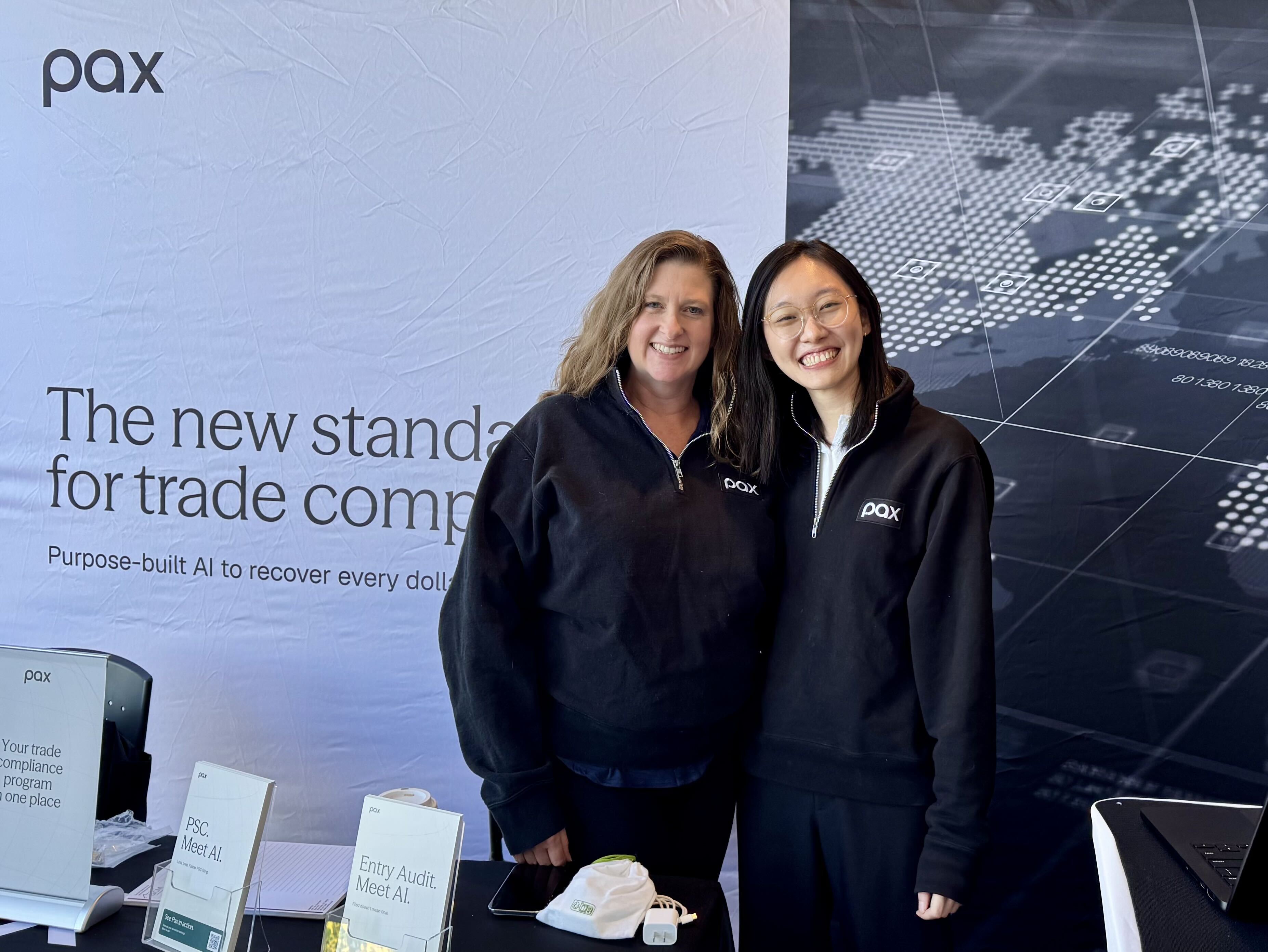
I love a complicated puzzle, and few are as complex as U.S. FTZ Administration Software. Melissa Irmen knows that complexity firsthand.
When I first told her we were building U.S. FTZ Administration Software, she walked me through the details people underestimate and the responsibility of getting them right. She was speaking from experience. She had built it before.
I kept asking questions. So did she. As I showed her how we build at Pax, we started exploring problems she had been thinking about for years. I could see possibilities opening up, and our conversations became less about what we were taking on and more about how we could tackle it together.
Today, I’m excited to share that Melissa is joining Pax to build U.S. FTZ Administration Software again. She knows the work ahead - and that makes her decision to join us mean even more to me.
Why build U.S. FTZ Administration Software again?
Melissa combines a computer science background with more than two decades in the U.S. FTZ community. She helped develop software at Integration Point, served as chair of NAFTZ’s board, and supported the industry as its Director of Advocacy and Strategic Relations.
She returns to building with a broader perspective on what American manufacturers and distributors need - and new technology to work with.
“Joining Pax feels like coming full circle for me. I’m returning to where I started in the U.S. FTZ community, but with years of additional experience and incredible new AI technology. I’m excited to help build smarter, more powerful tools that support the U.S. FTZ program and the American manufacturing and distribution businesses that rely on it.”
Why Pax?
Pax’s work across duty drawback, audits, reconciliation, post-summary corrections, and entry filings gives us a foundation for U.S. FTZ Administration Software. We’ve also benefited from U.S. FTZ experts who have challenged our assumptions and helped us understand what matters most.
Melissa saw a place where she could put her experience directly into practice, working closely with the people designing and building the product.
“What stood out was how quickly the team could take something we discussed and give me something concrete to react to. I could see how my experience would shape the product.”
That close collaboration will extend to our customers. Melissa will help shape the software and bring deep expertise to the support we provide alongside it.
Why now?
U.S. FTZ teams need better tools to keep pace with changing requirements. AI gives us new ways to reduce the time spent assembling information, investigating discrepancies, and figuring out what needs attention.
Our job is to turn those possibilities into dependable workflows, with clear information people can review and act on.
Bringing Melissa on now means her experience can shape the software from the start and guide how it evolves. As regulations change and new challenges emerge, she’ll help us stay close to what the industry needs and keep building to meet it.
The measure of success is simple: customers should be able to point to part of their day and say, “This is easier now.”
Melissa, I’m glad we’re taking this on together.